Mixing shouldn't be about guessing. It should be about certainty. Where you are. Where you want to go. We show you how to get there.
Classic Sound. Digital Precision.
Our mission is simple: the classic circuits that shaped how records sound, rebuilt with the clarity, control and precision only digital can give. Analog Sounds in a Digital Age — and every meter tells you the exact move that gets you there.
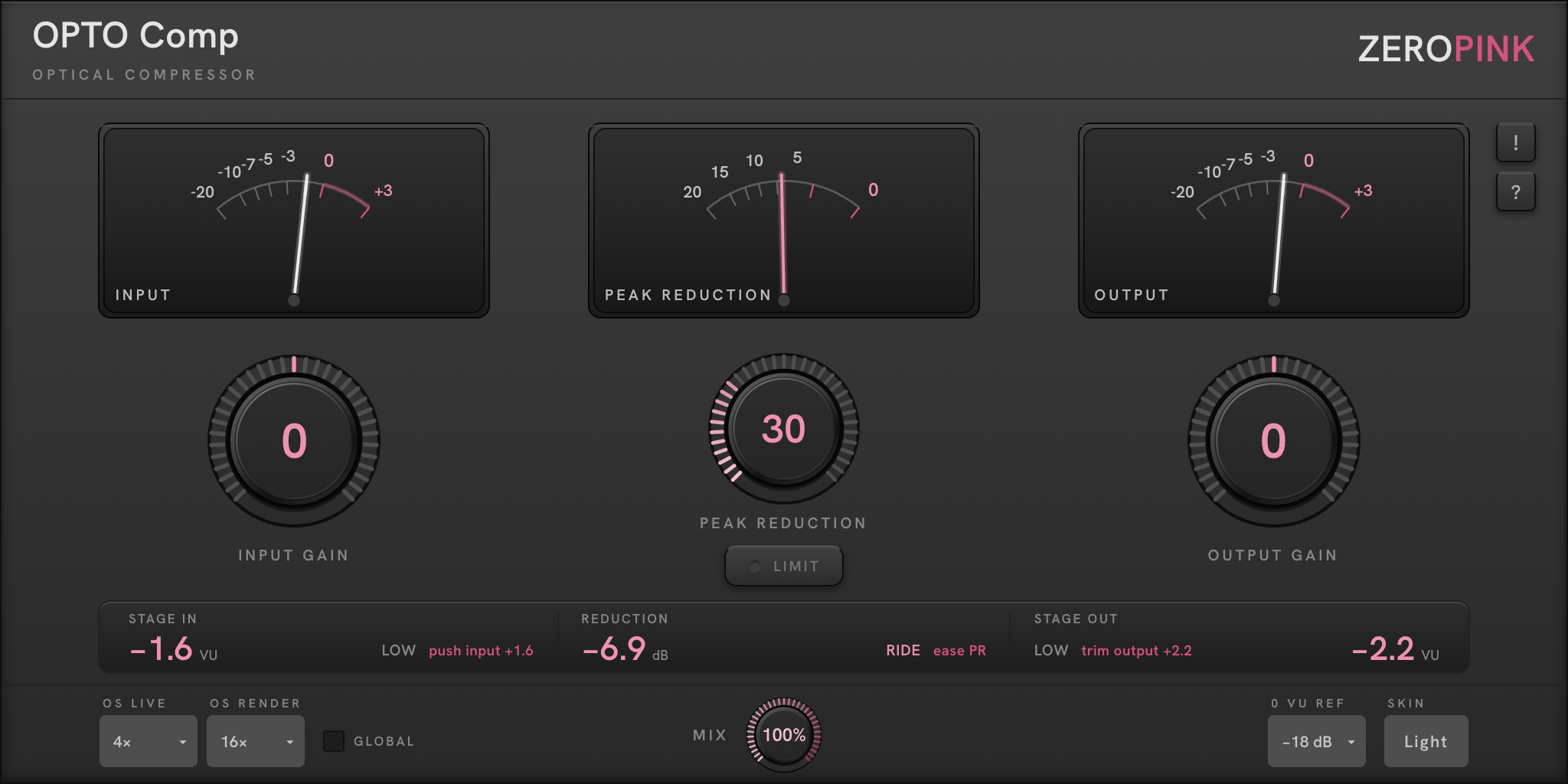
ZEROPINK | OPTO Comp
The discreet one. The LA-2A’s optical circuit has carried lead vocals for sixty years — it holds a voice steady without you ever hearing it being held, breathing with the music. Vocals, bass, acoustic instruments: the heritage sound of untouched, with digital precision the hardware never had.
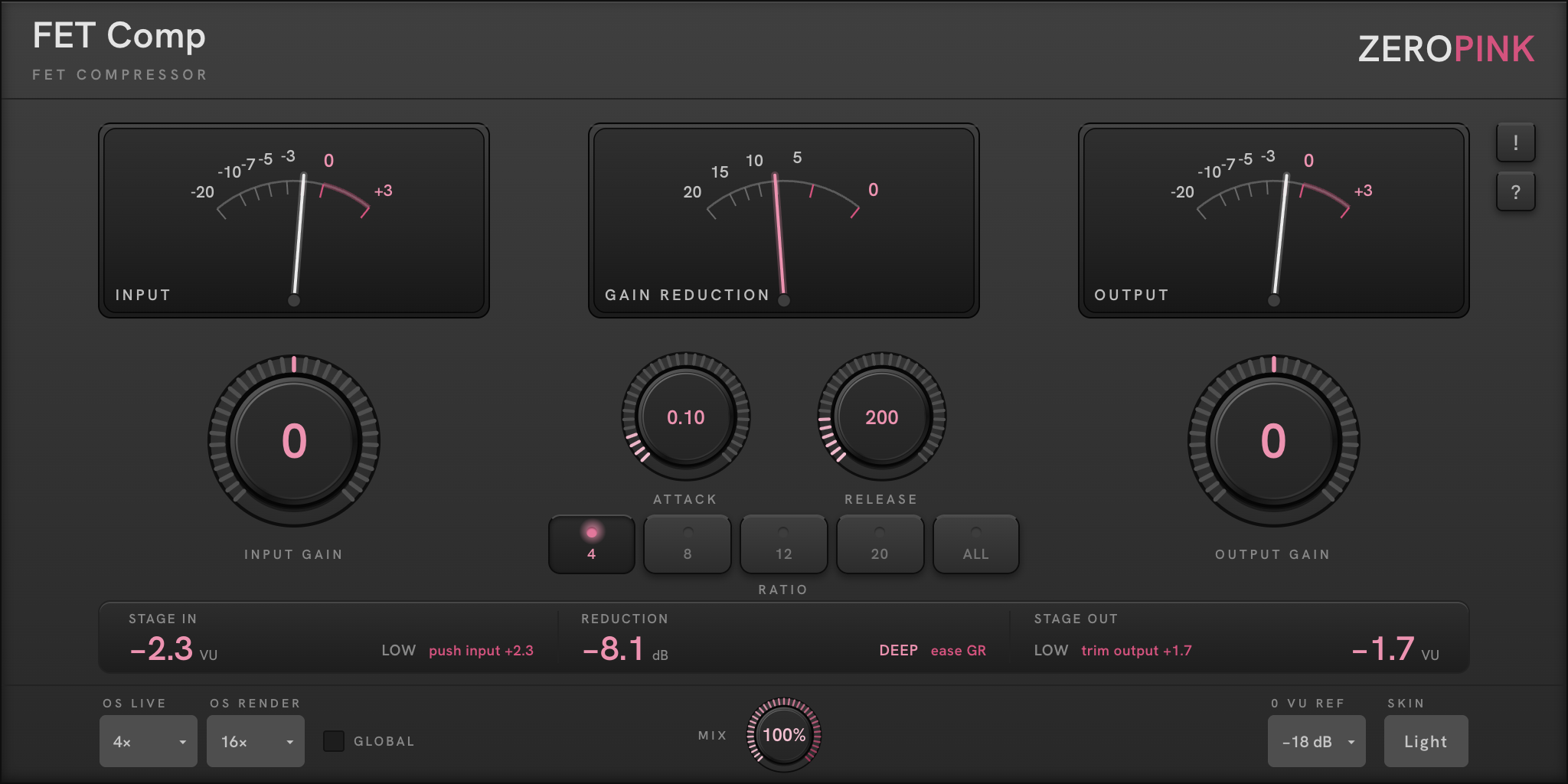
ZEROPINK | FET Comp
The brazen one. The 1176 is the most recorded compressor in history — the sound of the classic drum rooms, the explosive ambience on the records you grew up with. When a mix sounds polite and you want it alive, this is the legacy you plug in — with the clarity and recall of a modern plugin.
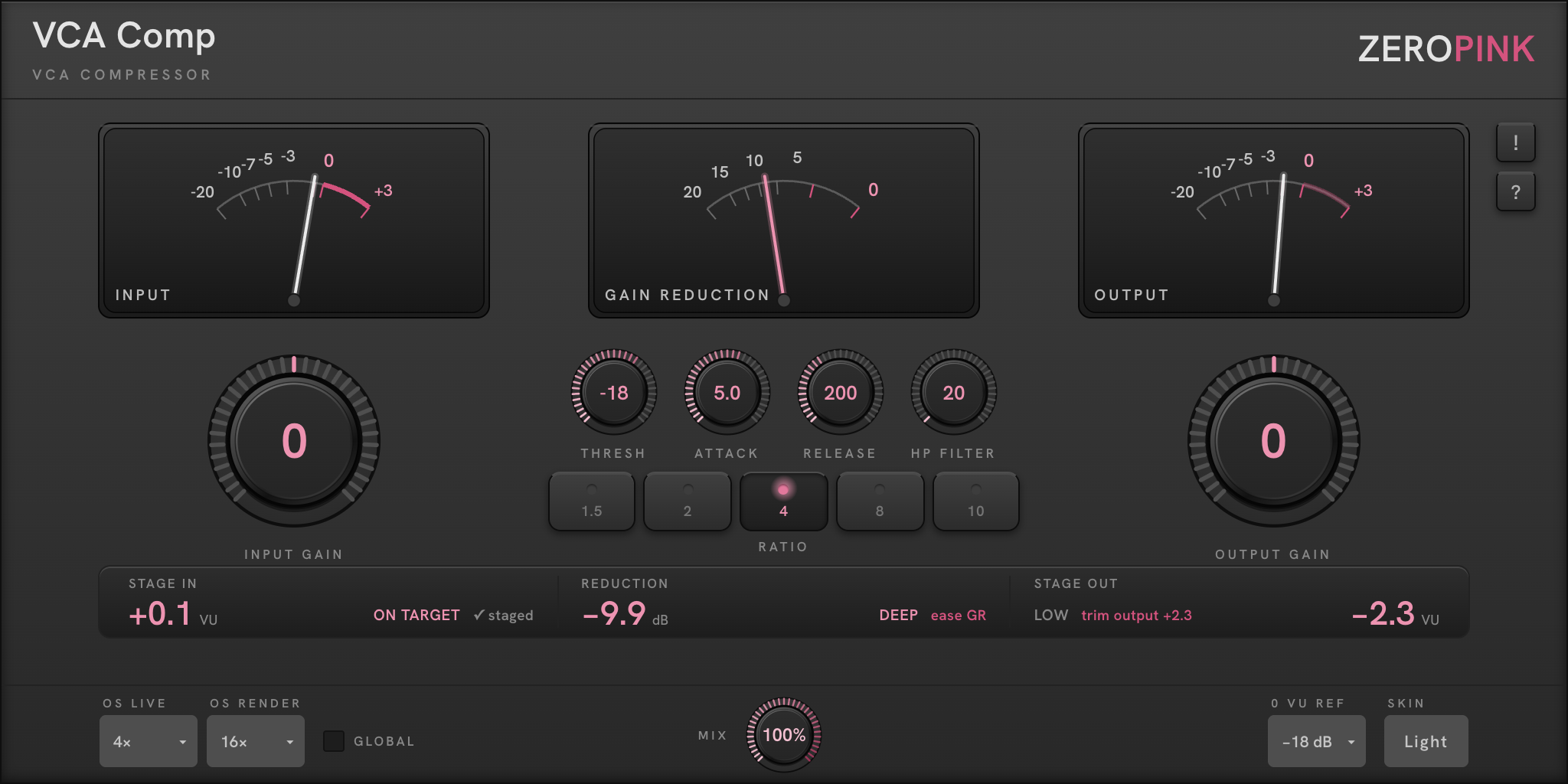
ZEROPINK | VCA Comp
The one that brings it all together. The VCA bus compressor is the glue of four decades of records — the circuit at the centre of the great mixing consoles. Set it breathing with the tempo and a mix reads as cohesion, not compression. The console heritage, on your master bus — under precise digital control.
The Program Equalizer
Broad strokes and musical corners for full mixes and complex programme — the tone shaper that finishes what the compressors hold together.
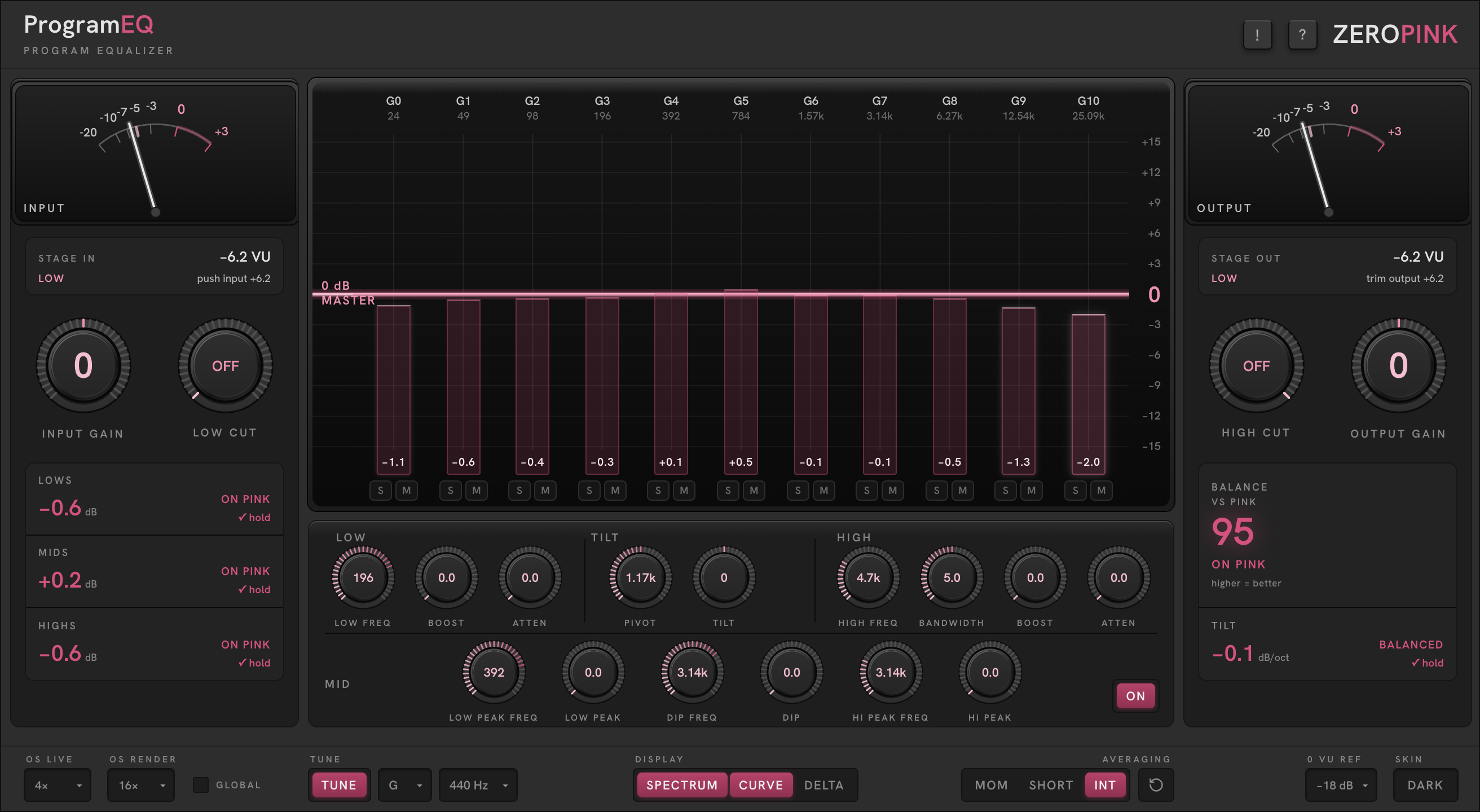
ZEROPINK | ProgramEQ
The classic program equalizer — the broad-stroke tone shaper that has finished records for seventy years, rebuilt with precise digital control. TILT sets the light balance first, the famous boost-and-atten low end builds the foundation, and with TUNE engaged every frequency snaps to the key of the song. Boost 98 Hz in G and you are boosting G.
The Graphic Equalizer
The console-top graphic — eleven faders, one gesture — with one idea the classics never had: the bands sit on your song’s notes.
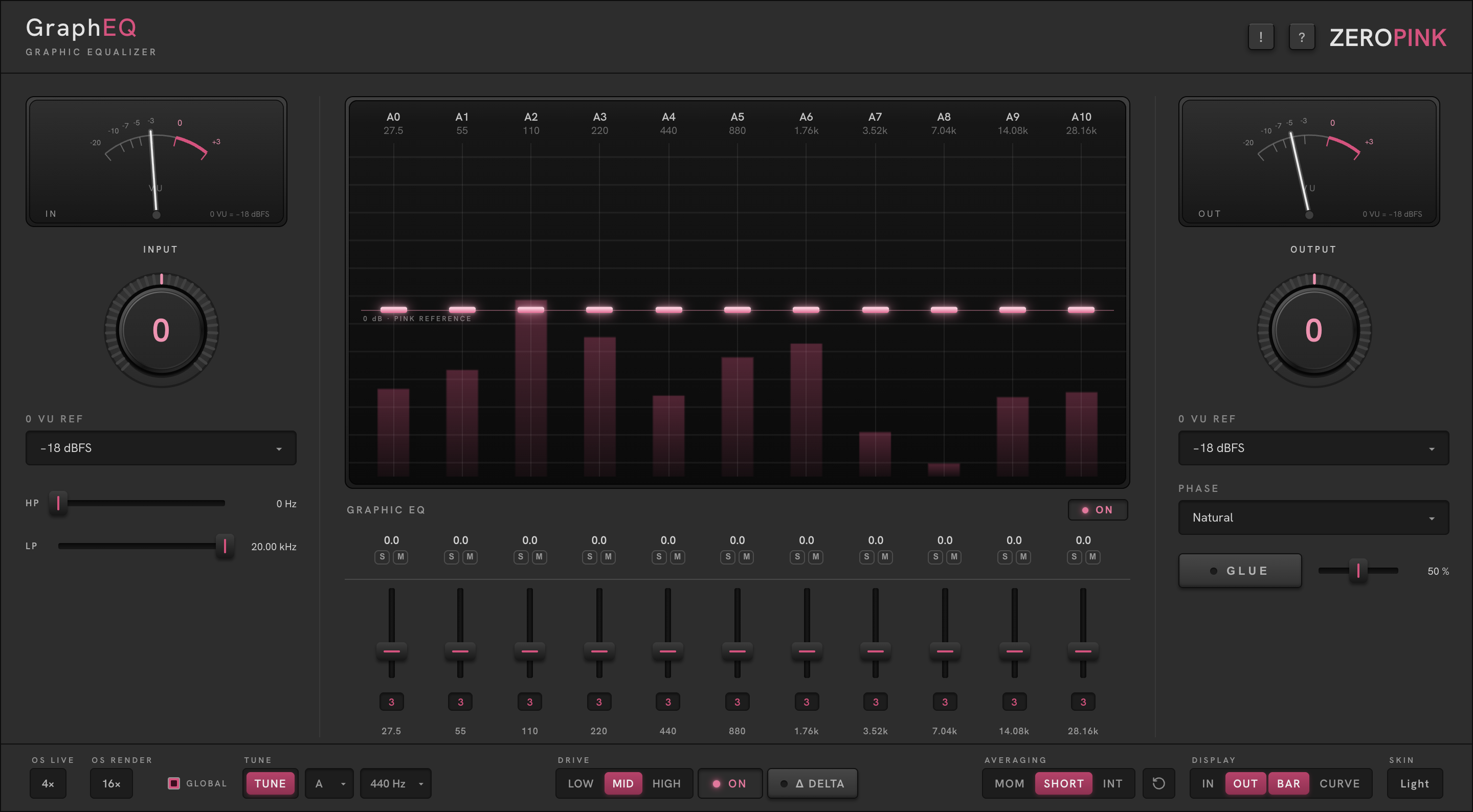
ZEROPINK | GraphEQ
The classic graphic equalizer, rebuilt with precise digital control. Set TUNE to the key and all eleven octave bands land on that note’s octaves — boost a band and you are boosting the root, every time. Under each band, a saturation slider adds harmonic weight where a boost alone can’t. Cut with EQ, fill with drive, against a live analyser on the pink reference.
The Tape Machine
For half a century, tape was the record — the weight, the rounded transients, the top that stays sweet as it gets loud.
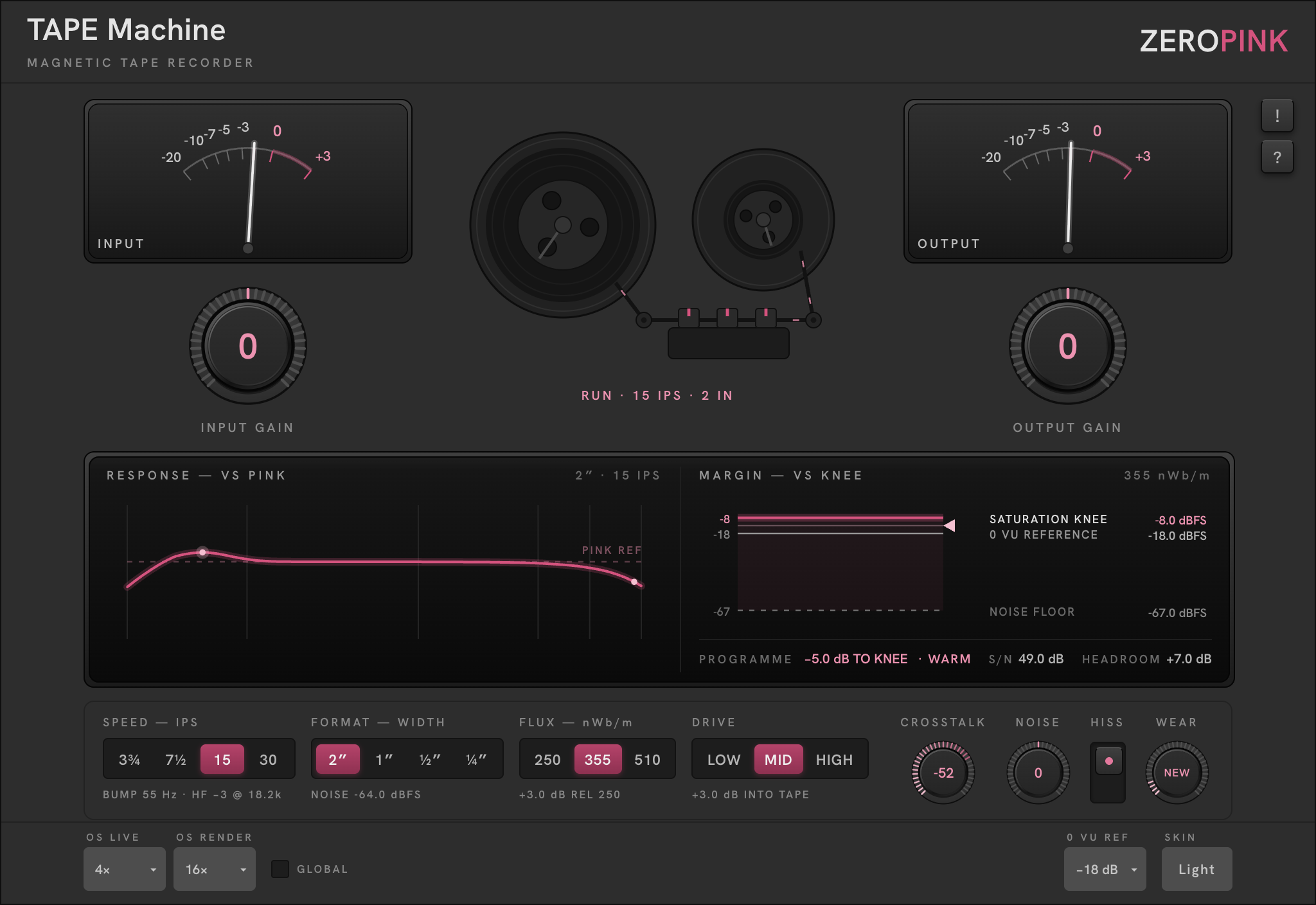
ZEROPINK | TAPE Machine
A bespoke recording and mastering tape machine — head bump, saturation knee, format noise and a transport in motion, rebuilt with digital control and precision. Where the hardware asked you to trust your ears and a maintenance log, this machine draws what it is doing on the glass, exactly, live.
The Plate
A sheet of steel hung under tension. Hit it and the whole sheet rings — dense, smooth, the reverb on most of the vocals you grew up with and the splash on most of the snares.
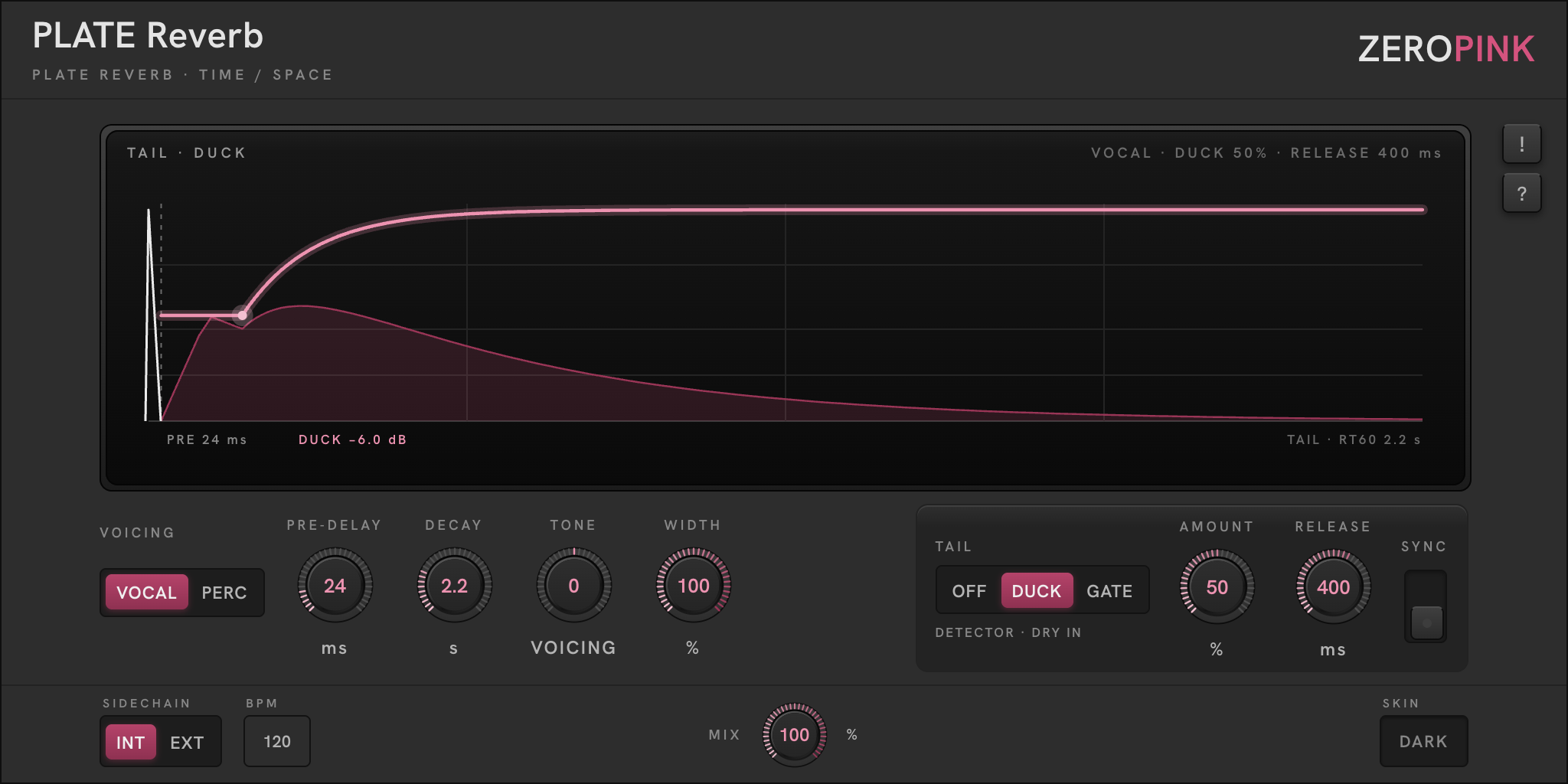
ZEROPINK | PLATE Reverb
Two plates — VOCAL, lush and dark, keeping the words in front; PERC, the splash: immediate, bright, gone. Then the control the hardware never had: a tail that ducks under the source and swells back in the gaps, or gates in time with the song. The tail is drawn on the glass, live — set it by eye, confirm by ear.
The Delay
Tape, bucket-brigade, early digital, lo-fi — every era had its way of repeating a sound. One stereo delay line carries all four, and draws every repeat on the glass before you hear it.
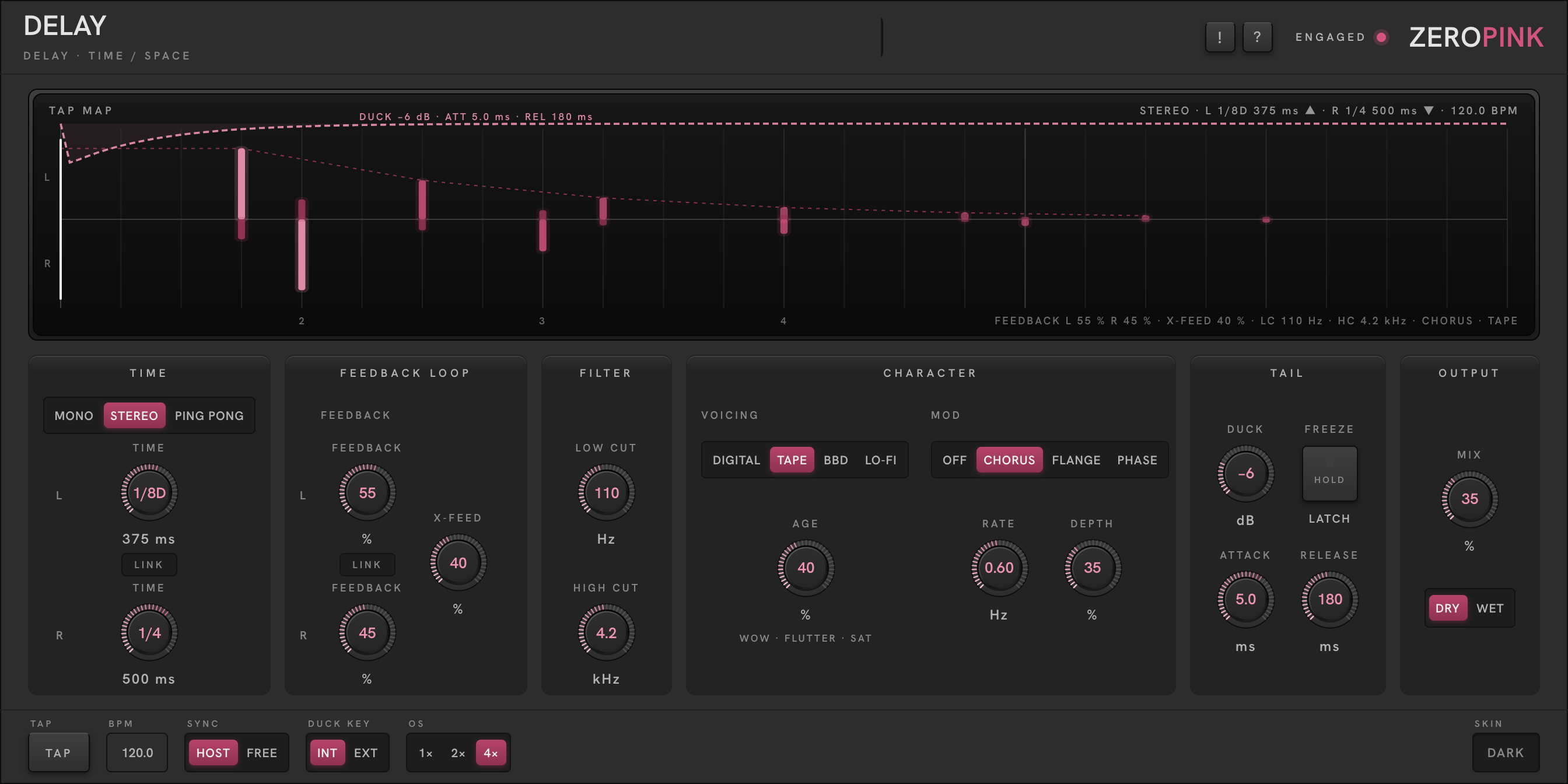
ZEROPINK | DELAY
DIGITAL, TAPE, BBD or LO-FI voicing with one AGE knob for the wow, flutter and saturation. MONO, STEREO or PING PONG, tempo-synced or free. A filtered, modulated feedback loop; a DUCK that keeps the repeats under the source; a FREEZE that holds the tail. The tap map shows every repeat, live.
The Drum
A drum is two heads and a stick. Every trigger since the eighties has fixed a thin recording by layering a sample over it — THUMP builds the missing drum from its three parts instead, fired by the real hit, in the real drum’s key.
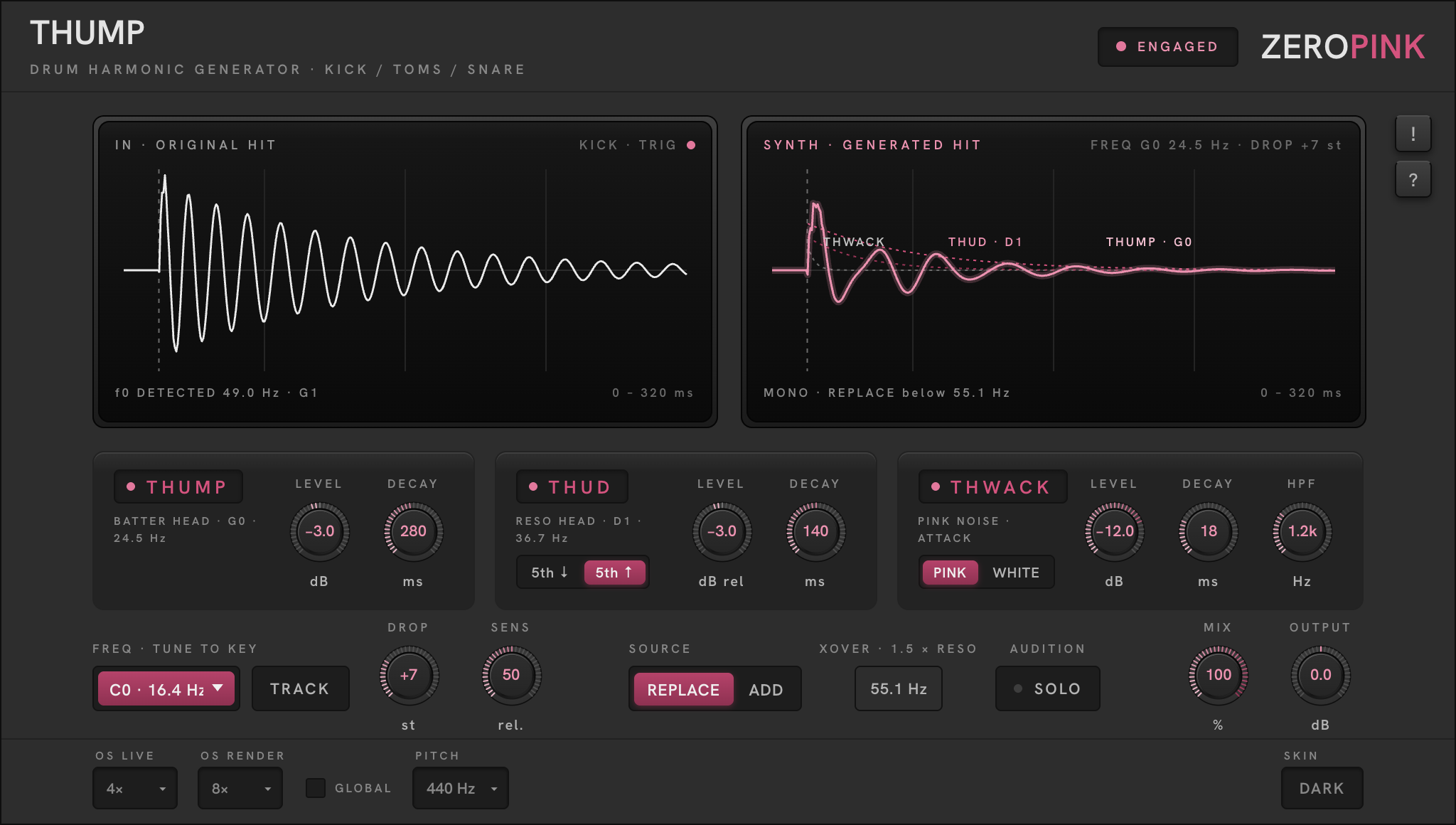
ZEROPINK | THUMP
THUMP for the batter head, THUD for the reso head, THWACK for the beater — each with its own level and decay. TRACK follows the incoming fundamental; REPLACE gives the generated low end everything below the crossover. Two scopes show the drum that arrived and the drum you are building, side by side.
Every measurement on every meter
traces back to two references.
ZERO = Level
The Sweet Spot — the level analogue-designed gear is built for. Stage every track to it and every circuit works where it sounds best.
PINK = Balance
Equal energy in every octave — the way a balanced mix spreads its energy. Compare against it and each octave reads too much, too little, or in place.